
Start with the directions on your Earl Grey tea. If none are provided, use fresh cold water brought to a boil, brew about 1 teaspoon of loose tea per 8 ounces, steep 3 to 5 minutes, and adjust the next cup by changing only the steep time first. From there, Earl Grey becomes easier to understand once you know what bergamot adds, why published brewing advice varies, and which origin stories are documented versus disputed.
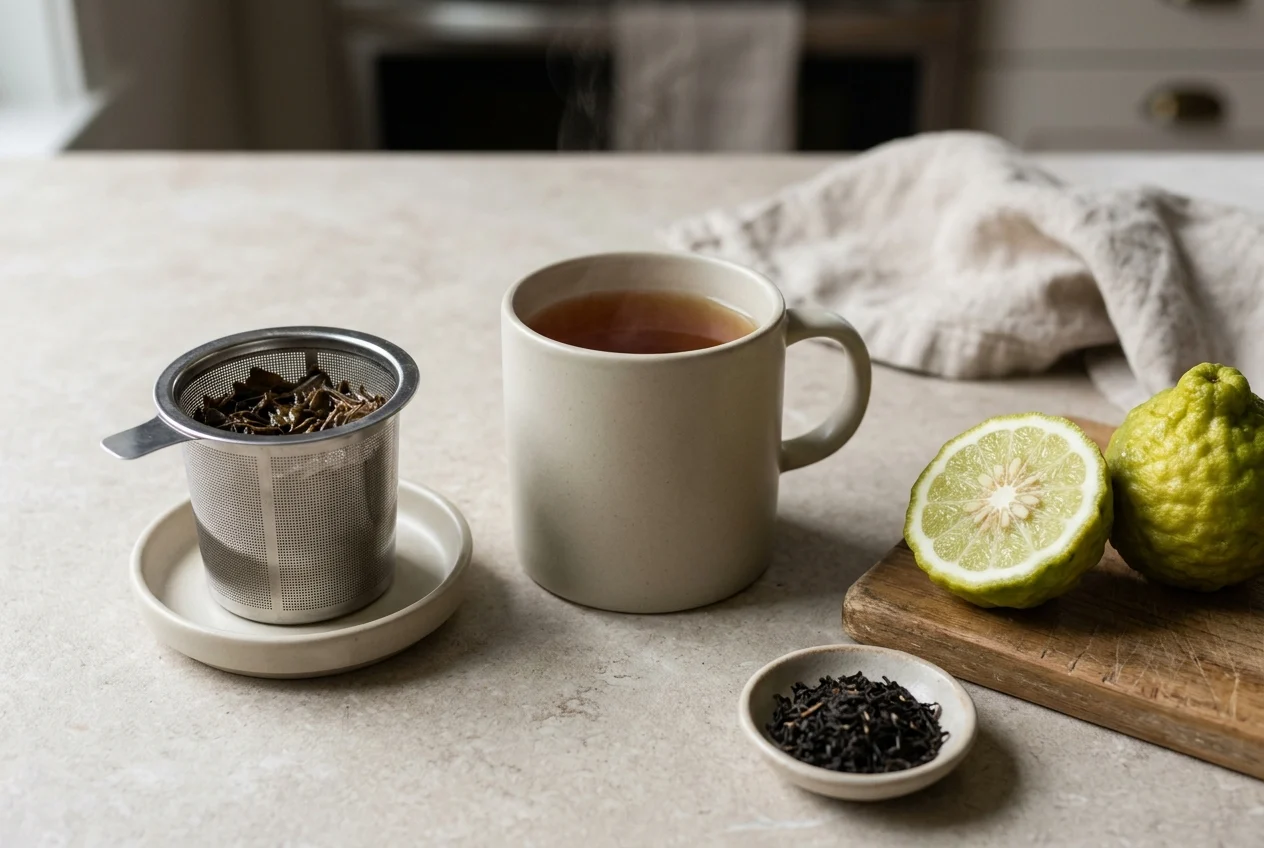
Brew Earl Grey by the tea’s own directions first
Brew Earl Grey by the package directions first. When the label gives you a water and steeping time, that is the best place to begin because Earl Grey is a blend style, not one single formula, and the maker’s instructions are the clearest guide to how that particular tea was meant to taste.
If your tea gives no directions, a practical starting cup is fresh cold water brought to a boil, about one teaspoon of loose tea per eight ounces, and a 3 to 5 minute steep. That starting point comes from Twinings' loose-tea guidance for black tea and its published 3-5 minute range for Twinings Earl Grey Loose Tea. Steeped Street publishes a slightly different Earl Grey method—208°F and 3 minutes—which is a good reminder that your first cup is a baseline to taste, not a law of nature.
What do published Earl Grey directions actually say?
Read side by side, Twinings' loose-tea guidance, Steeped Street's Earl Grey method, and Full Moon Tea Company's general black-tea range are not really contradicting one another so much as talking at different levels. One is brand-specific loose-tea guidance, one is an Earl Grey how-to, and one is broader black-tea advice. That context matters because boiling water is a verified published method here, not something to edit away in favor of a false consensus.
What the comparison really gives you is permission to be methodical. If your own packet tells you what to do, follow it. If it does not, choose one named published method, make a full cup, and judge the result before you start chasing smaller details.
| Source | What the guidance covers | Water guidance | Tea amount | Steep time | How to use it |
|---|---|---|---|---|---|
| Twinings USA | Loose black tea, including Twinings Earl Grey Loose Tea | About 212°F (100°C); for black tea, steep immediately with boiling water | About 1 teaspoon per 8 ounces for beginners | Twinings Earl Grey Loose Tea: 3-5 minutes | A solid fallback when your tea gives no directions |
| Steeped Street | Earl Grey brewing method | 208°F (98°C), just below boiling | 1 teaspoon per cup | 3 minutes for loose tea; 4-5 minutes for a tea bag | A slightly gentler Earl Grey-specific starting point |
| Full Moon Tea Company | General black-tea temperature advice | 200°F to 212°F (93°C to 100°C); boil, then let it cool for a moment | Not specified in the cited guide | Not specified in the cited guide | Useful as a black-tea range, not an Earl Grey-specific rule |
What makes Earl Grey different from plain black tea?
Earl Grey is a style of black tea scented with bergamot, not a different tea plant or a separate processing category. That is why it can taste both familiar and distinctive at once: the black tea gives the cup its structure, while bergamot pushes the aroma toward brighter citrus and floral notes.
Twinings describes bergamot as Citrus bergamia, a citrus fruit native to the Mediterranean, and says the rind is cold pressed to extract the oil used for Earl Grey. Steeped Street adds that some blends are flavored by spraying bergamot oil onto black tea leaves, while others include dried bergamot peel. That helps explain why one Earl Grey can read as brisk and lemony, another as softly floral, and a third as more rounded and orange-blossom-like even before milk, honey, or lemon enter the picture.
Because Earl Grey is flavored black tea rather than plain black tea, small brewing changes affect more than strength alone. A short steep may leave the bergamot seeming bright but the tea base a little thin; a longer one can bring more body from the black tea underneath. Much of the real adjustment process is learning where you want that balance to land.
Who was Earl Grey, and how secure is the origin story?
The secure part of the story is the man, not the recipe. Earl Grey tea is named after Charles Grey, the 2nd Earl Grey, who served as British Prime Minister from 1830 to 1834. Beyond that, the record gets much less certain.
The best-known legends say a British envoy—or Earl Grey himself—received the blend or its recipe after saving a Chinese mandarin or the mandarin’s son. The Boston Tea Party Ships & Museum notes that neither story has been substantiated. The same source also points out that bergamot is not a native Chinese fruit, which is one reason those diplomatic origin stories are treated cautiously rather than repeated as settled fact.
Twinings tells its own version of the tale and says it began selling Earl Grey in 1831, after Grey asked the company to reproduce the tea for others to enjoy. That is Twinings' account, not independently documented proof of the blend’s first appearance. Boston Tea Party Ships & Museum also reports that Jacksons of Piccadilly claimed ownership of the original recipe and quoted a 1928 advertisement saying the tea had been introduced in 1836. Put together, the evidence supports the name and the period more firmly than it supports any single origin legend.
Explore Earl Grey alongside jasmine and chamomile
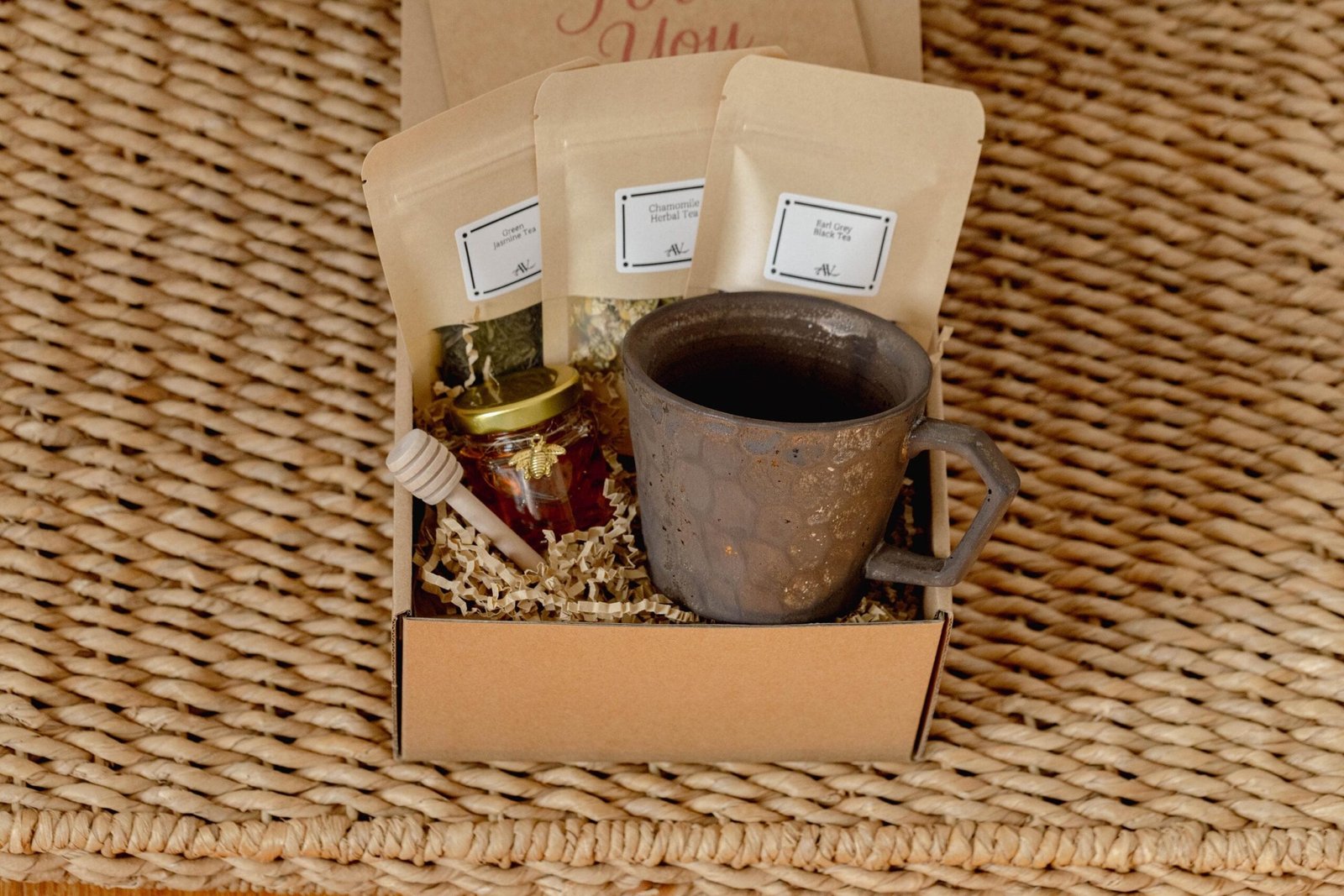
If reading about bergamot makes you want comparison more than theory, the AdoreVera Tea & Honey Mug Gift Set is useful because it gives you three tea styles in one mug-included format. The listing includes a tea cup, Earl Grey black tea, 0.6 oz jasmine green tea, 0.3 oz chamomile tea, a 1.7 oz jar of honey with a wooden dipper, and your selected gift card. The listing also offers seven card designs, with the same cup, teas, and honey regardless of which card you choose.
That matters when you are buying for curiosity rather than loyalty to one style. Instead of committing a recipient to only bergamot-scented black tea, the set lets them taste Earl Grey against floral jasmine green tea and chamomile in the same box. If you are choosing between formats rather than between flavors, How to Choose a Tea Gift Set compares the fixed assortments by their listed contents so the decision is about what is actually in the box.
If the recipient is new to loose-leaf tea, check whether they already have a strainer or infuser. The mug set does not include one.
How should I adjust the second cup?
The best second cup is a small experiment, not a complete restart. Begin with the package directions or with your fallback first cup, and then change one variable only.
If the first mug tastes too strong or bitter, keep the tea amount and water the same and shorten the steep on the next try. If it tastes thin or vague, keep everything else the same and steep longer within the published range before adding more tea. Twinings gives Earl Grey Loose Tea 3 to 5 minutes, while Steeped Street starts loose Earl Grey at 3 minutes, so steep time is the easiest first lever to move without muddying the comparison.
For example, imagine you brew one teaspoon in eight ounces with freshly boiled water and stop at 4 minutes. If the cup feels harsh, try 3 minutes next time. If it smells lovely but drinks weak, try 5 minutes before changing the leaf quantity. Only after you know which steep time you prefer should you test more or less tea, because changing both time and quantity at once makes it much harder to learn what actually improved the cup.
| What happened in the first cup | Keep constant | Change next | Why start there |
|---|---|---|---|
| Too strong or bitter | Tea amount and water amount | Shorten steep time | It is the cleanest way to reduce extraction without changing everything at once |
| Too light or vague | Tea amount and water amount | Lengthen steep time within the published range | You can test the tea’s fuller expression before assuming you need more leaves |
| Still not right after time feels settled | Water amount and your preferred steep time | Use a little more or a little less tea on the next cup | Quantity is easier to judge once steep time is no longer the main variable |
Frequently asked questions
Can I brew loose Earl Grey without an infuser?
Yes. Steep the leaves directly in a teapot, then pour the tea through a fine-mesh kitchen strainer into your cup as soon as the steep is done. If the tea is a gift, use our loose-leaf tea gift checklist to decide whether to include an infuser.
How do I make iced Earl Grey that still tastes of bergamot?
For a glass over ice, follow Adagio’s method for hot-brewed iced tea. Use twice your usual amount of tea for the same water and keep your usual steep time. Strain the tea before pouring it over ice. The extra leaves help the tea hold its flavor as the ice melts.
Do I need to add milk to Earl Grey?
No. Taste it plain first so you can pick out the bergamot. If you’re curious about milk, split one brew between two cups and add a small splash to one of them. You can compare the flavor without changing how you brewed the tea.