
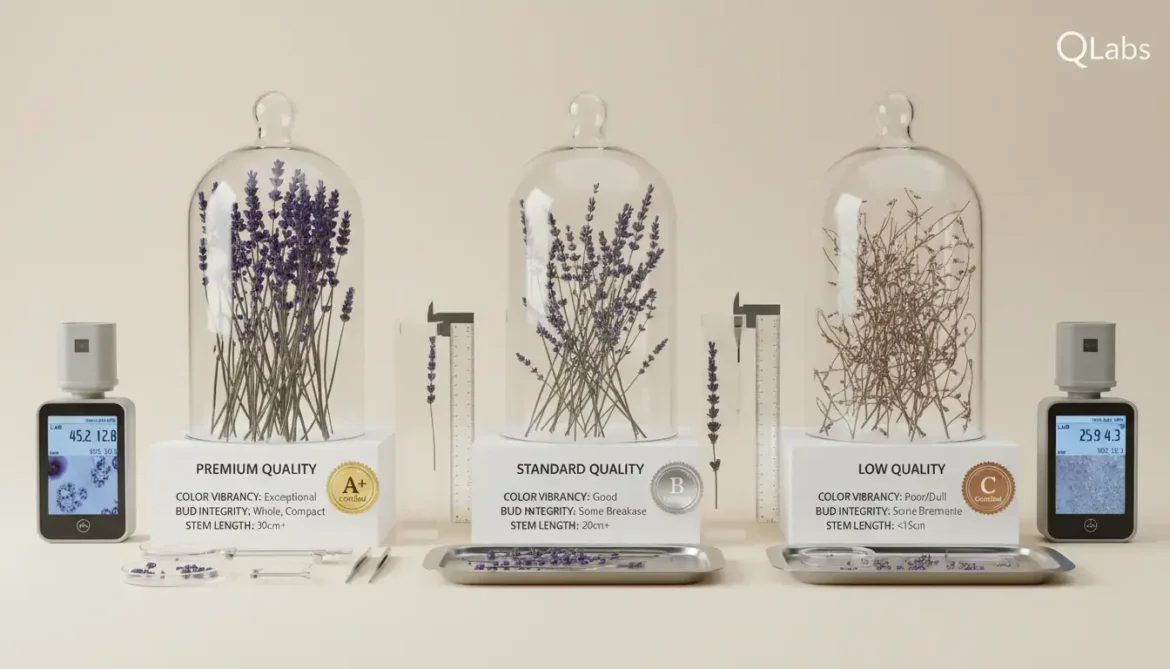
How to Choose the Best Dry Lavender Flowers: Purity, Potency & Sourcing Guide
Walk down any wellness aisle, and you’ll find dried lavender. It’s in sachets, tea blends, and bath soaks. But a closer look reveals a startling truth: not all lavender is created equal. Some bundles are dull and grayish, with a scent that fades in days. Others are vibrant and intensely fragrant, holding their aroma for months.
So, how do you know you’re choosing a truly premium product? How can you be sure you’re getting the pure, potent flowers you need for your self-care rituals, and not just a pretty-looking filler?
The market is crowded, and distinguishing high-quality lavender from the mediocre can feel overwhelming. Many people simply guess, hoping for the best. But there’s a better way. This guide provides a clear, expert-backed framework for evaluating dried lavender, empowering you to assess quality like a professional. We’ll move beyond surface-level tips and dig into the three pillars of exceptional lavender: Purity, Potency, and Sourcing.
Understanding Lavender Quality: Beyond the Purple Haze
Before you can evaluate lavender, you need a framework. Industry experts and botanical research point to a consistent set of quality indicators. While many suppliers talk about “premium” quality, few explain what that actually means. True quality isn’t just a marketing term; it’s a measurable result of careful cultivation, harvesting, and processing.
Think of it as the difference between a generic herb off a dusty shelf and a handcrafted blend from an artisan. One is an afterthought; the other is an experience. The key is to understand the tangible signs of quality that separate the two.
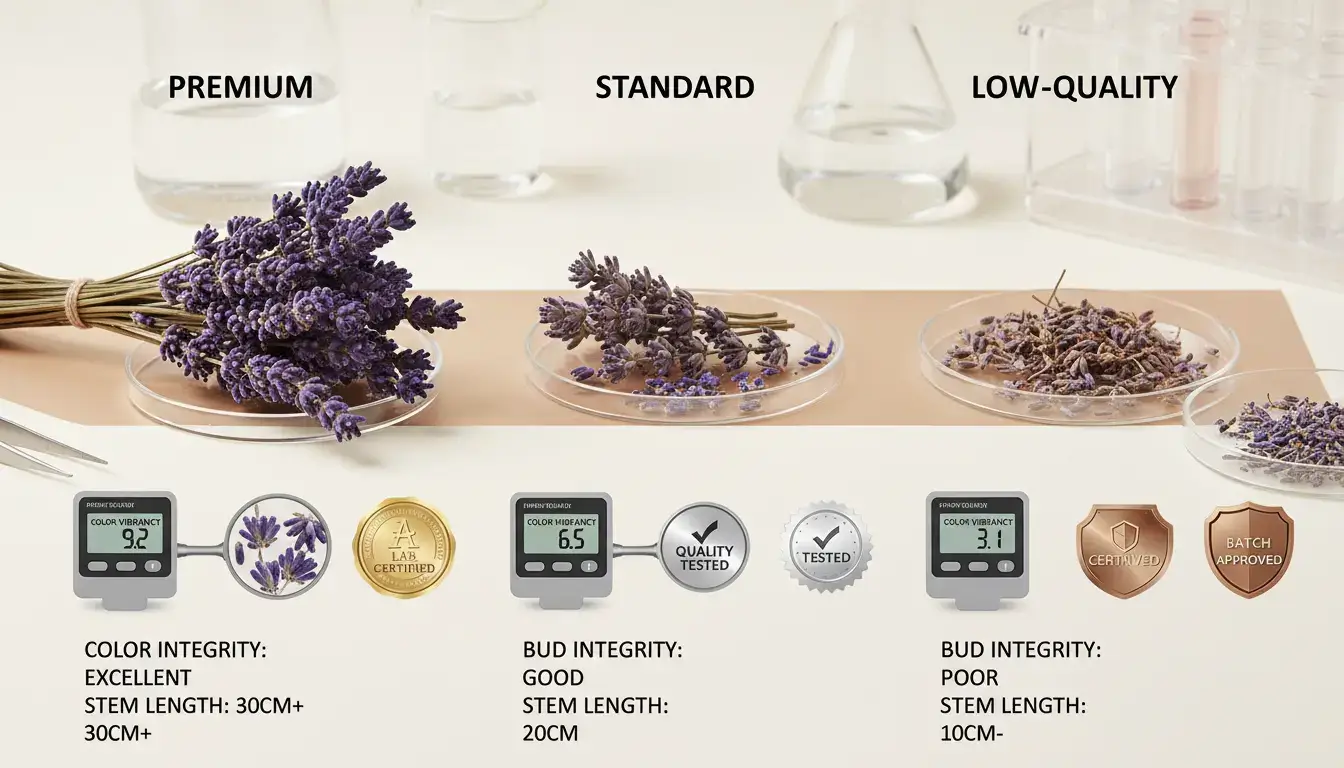
The Expert’s Evaluation Framework: A Step-by-Step Guide
Based on botanical studies and professional grading standards, this framework breaks down the evaluation process into simple, actionable steps. Instead of relying on vague claims, you can use your own senses to verify quality.
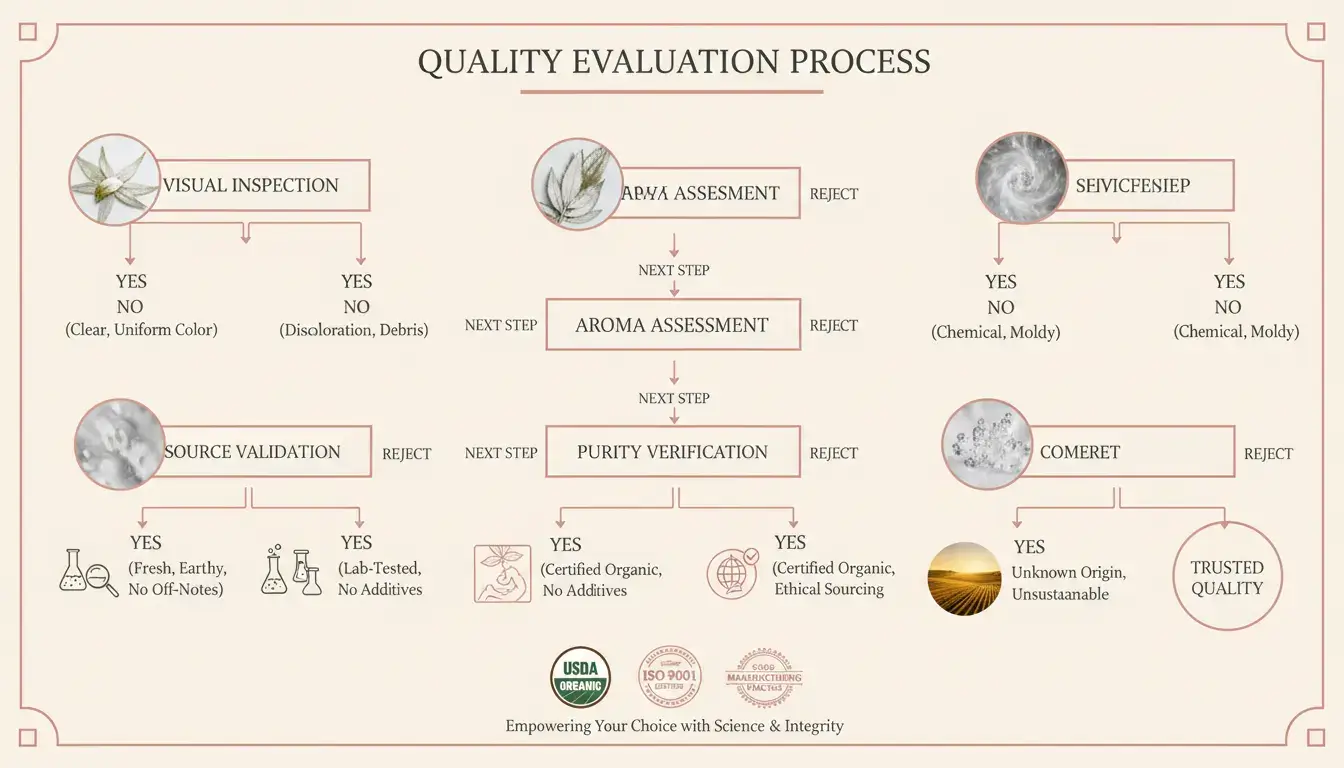
Purity: Spotting the Signs of a Truly Natural Product
Purity is the foundation of quality. It means the lavender is free from pesticides, chemicals, and contaminants. Low-quality lavender is often mechanically harvested, collecting dust, debris, and other plant matter in the process.
- What to look for: Examine the flowers closely. They should be clean, with minimal dust or brown organic matter. Avoid lavender that looks dull, dusty, or has visible signs of mold or mildew.
- What it means: Clean, pure flowers indicate careful, often manual, harvesting and handling. This ensures you’re only getting lavender in your final product, which is especially critical for any DIY wellness projects or topical applications.
Potency: Judging Color and Aroma Like a Professional
Potency refers to the concentration of aromatic essential oils in the lavender buds. This is what gives lavender its signature scent and therapeutic properties. Research shows a direct connection between harvesting time, drying methods, and the final chemical composition that determines potency.
Visual Assessment: Read the Color
- Look for deep color: High-quality dried lavender should have a rich, deep blue or purple hue. Color indicates that the lavender was harvested at its peak, just before the flowers fully opened, when the essential oil concentration is highest.
- Avoid gray or brown tones: A faded, grayish color is a clear sign of old stock, sun damage, or lavender that was harvested too late. This lavender will have a much weaker, dustier scent.
Aromatic Evaluation: The Crush Test
The most reliable way to judge potency is through scent.
- Perform the crush test: Take a single bud between your fingers and gently roll or crush it. This should release a powerful, clean, and immediate floral fragrance.
- Analyze the scent profile: The aroma should be complex and sweet, not musty or faint. If you barely smell anything, the oils have likely degraded, and the lavender is past its prime. Potent flowers are the cornerstone of effective herbs for wellness.
The Sourcing Guide: How Ethical Practices Create a Superior Product
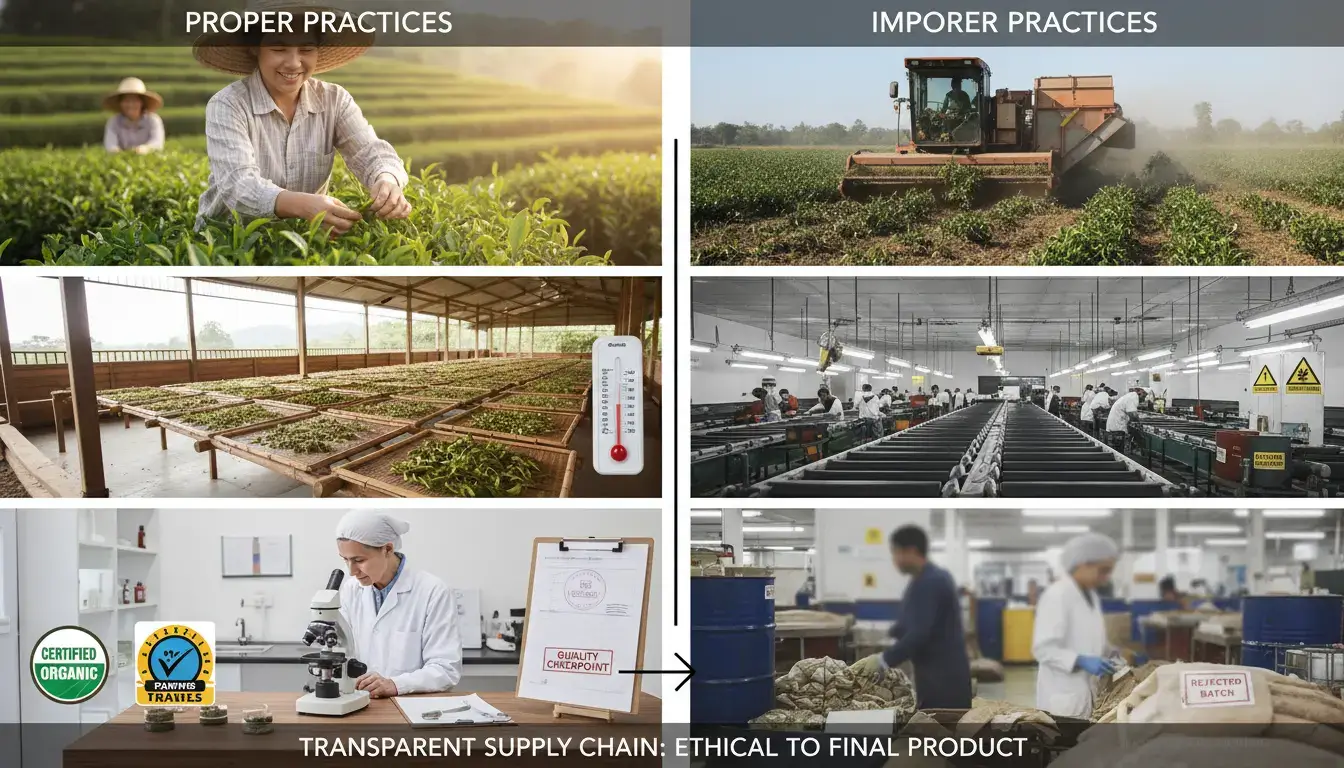
Where and how lavender is grown has a profound impact on its final quality. Ethical sourcing goes beyond fair labor; it encompasses sustainable farming practices that yield a purer, more potent plant.
Producers committed to quality often hand-harvest their lavender. This selective process ensures only the best stems are chosen at their peak. It also prevents the damage and contamination common with mechanical harvesting. Following the harvest, the method of drying is critical. Natural air-drying in a dark, ventilated space is the superior method. It preserves the delicate essential oils and vibrant color, unlike industrial heat-drying, which can scorch the flowers and evaporate the very compounds you want.
When evaluating a supplier, look for transparency about their farming and processing methods. Do they talk about where their lavender comes from? Do they explain how it’s harvested and dried? This transparency is a hallmark of a brand that is confident in its quality.
Lavender for Every Purpose: Matching the Grade to Your Needs
Different uses call for different lavender characteristics. Understanding your purpose will help you prioritize the evaluation criteria.
- For Relaxation and Wellness: Potency is paramount. You need lavender with the highest concentration of essential oils to create effective bath bombs or relaxing sachets. A truly luxurious Blissful Pampering Gift Box will always feature lavender that passes the crush test with flying colors.
- For Culinary Use: Purity is non-negotiable. Ensure the lavender is explicitly labeled as culinary or food-grade, guaranteeing it was grown without pesticides.
- For Crafts and Decor: Visuals are key. Look for lavender with vibrant color and excellent bud integrity on long, sturdy stems.
Frequently Asked Questions About Choosing Dried Lavender
How long does dried lavender’s scent last?Properly harvested and stored high-quality lavender can retain its scent for a year or even longer. To maximize its lifespan, store it in an airtight container away from direct sunlight and heat. If you notice the scent fading, just gently squeeze the buds to release a fresh wave of aroma.
What’s the difference between English and French lavender varieties?English lavender (Lavandula angustifolia) is typically preferred for culinary and therapeutic uses due to its sweeter, less camphoraceous scent. French lavender (Lavandula x intermedia) has a higher camphor content, giving it a sharper aroma, which makes it excellent for deterring moths in closets.
Can I use any dried lavender to make tea?Absolutely not. You must use lavender that is certified food-grade and grown without chemicals or pesticides. Using decorative or craft-grade lavender can be unsafe. The principles of choosing pure flowers for tea apply to other botanicals as well, as you can learn in our guide to brewing the perfect cup with dried flowers.
The Adore Vera Difference: Our Commitment to Purity and Potency
Now that you’re armed with an expert evaluation framework, you can see why our approach at Adore Vera is different. We built our brand on the principles of quality you just learned.
- Purity: Our lavender is grown in pristine conditions, free from chemicals, so you only experience the pure essence of the flower.
- Potency: We hand-harvest our lavender at its absolute peak and use a slow, natural air-drying process. This preserves the vibrant color and locks in the essential oils, ensuring a powerful, lasting aroma that passes the crush test every time.
- Sourcing: We are transparent about our ethical and sustainable methods because we know they result in a superior product that elevates your self-care rituals.
You don’t have to guess about quality anymore. Experience the tangible difference that expert cultivation and care make. Explore our premium dried lavender and discover the true potential of this incredible botanical.