


Best Body Butters for Sensitive Skin: A Guide to Soothing Hydration Without Irritation
Best Body Butters for Sensitive Skin: A Guide to Soothing Hydration Without Irritation
Finding a body butter that deeply moisturizes without triggering a reaction can feel like a high-stakes gamble when you have sensitive skin. You’ve likely seen labels promising “gentle” or “natural” solutions, only to be left with redness, itchiness, or irritation. The problem isn’t a lack of options; it’s a lack of clarity. You need more than just a list of products—you need a reliable framework for understanding what your skin truly needs and how to identify ingredients that calm, protect, and hydrate.
This guide is designed to give you that confidence. We’re moving beyond surface-level advice to explore the science behind sensitive skin, decode ingredient labels, and provide a clear path to choosing a body butter that will become your trusted ally for soothing hydration.
First, Let’s Understand Sensitive Skin: It’s All About the Barrier
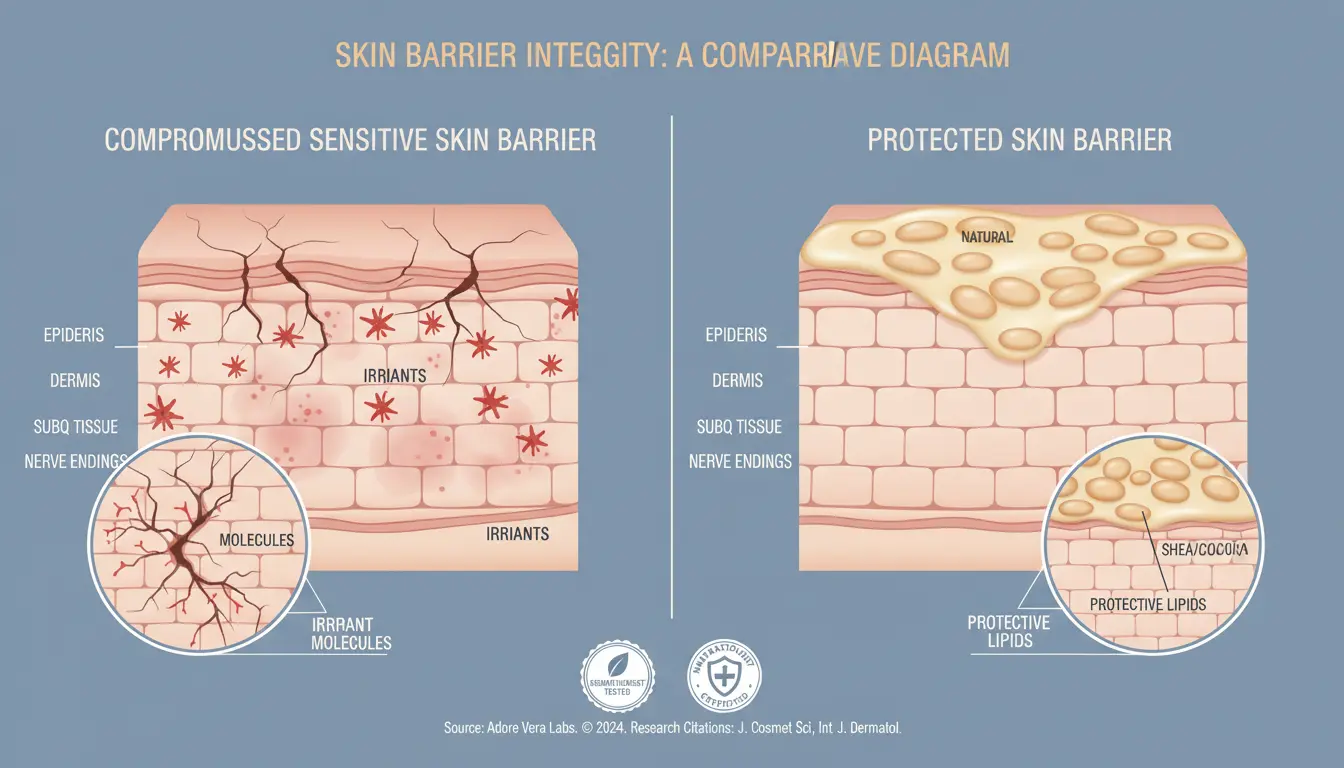
Before we can find the right solution, we need to understand the root of the problem. Sensitive skin isn’t just about occasional redness; it’s often a sign of a compromised skin barrier. Think of your skin barrier as a protective brick wall. In healthy skin, the “bricks” (skin cells) are held together tightly by a lipid “mortar” (natural oils). This wall does two critical jobs: it keeps moisture in and keeps irritants out.
According to research on skin barrier function, when this barrier is weakened, tiny cracks appear in the mortar. This “leaky” barrier allows moisture to escape, leading to dryness and dehydration. At the same time, it allows irritants like pollutants, allergens, and harsh chemicals to penetrate more deeply, triggering an inflammatory response. That response is what you experience as sensitivity—redness, itching, and discomfort.
Common triggers that can weaken the skin barrier include:
- Harsh Chemicals: Sulfates, synthetic fragrances, and certain alcohols can strip the skin of its natural oils.
- Environmental Factors: Low humidity, wind, and sun exposure can dehydrate the skin.
- Over-Exfoliation: While removing dead skin is important, overdoing it with products like a coffee sugar scrub can damage the protective barrier.
- Genetic Predisposition: Some people are naturally more prone to conditions like eczema or rosacea.
The goal isn’t just to moisturize; it’s to find a product that actively helps repair and reinforce this protective barrier.
The Soothing Power of Nature: Key Ingredients to Look For
When your skin barrier is compromised, the ingredients you apply matter more than ever. The right formulation can provide a protective seal, deliver anti-inflammatory compounds, and supply the fatty acids your skin needs to rebuild its lipid mortar. Studies on natural butters confirm their effectiveness, highlighting their rich composition of lipids and antioxidants that support skin health.
Here are the green-flag ingredients to look for:
1. Plant Butters (The Foundation)
These form the rich, occlusive base of any good body butter, creating a physical barrier that locks in moisture.
- Shea Butter: A true powerhouse for sensitive skin. It’s rich in vitamins A and E and essential fatty acids that mimic the skin’s natural lipid structure, helping to repair the barrier. Its anti-inflammatory properties are well-documented, making it exceptionally soothing.
- Mango Seed Butter: Lighter than shea butter but equally nourishing. It’s packed with antioxidants that help protect the skin from environmental stressors.
- Cocoa Butter: Excellent for preventing moisture loss, it forms a strong protective layer on the skin’s surface.
2. Nourishing Oils (The Support System)
Oils work in synergy with butters to deliver specific nutrients and enhance absorption.
- Jojoba Oil: Structurally very similar to our skin’s own sebum, making it easily absorbed and non-comedogenic (it won’t clog pores).
- Avocado Oil: Rich in oleic acid and vitamins, it’s fantastic for calming itchy, dry skin and promoting long-term hydration.
- Sweet Almond Oil: A mild, hypoallergenic oil that is known for its ability to soften and soothe irritated skin.
3. Calming Botanicals (The Specialists)
Certain plant extracts offer targeted relief for inflammation and redness.
- Calendula: Renowned for its powerful anti-inflammatory and healing properties. If you’re interested in its benefits, learning to brew calendula tea can be a great addition to your wellness routine.
- Chamomile: Contains compounds that actively reduce inflammation, making it a classic choice for calming reactive skin.
- Jasmine: Beyond its beautiful scent (when derived naturally), some forms like jasmine hydrosol can offer hydrating and soothing properties.
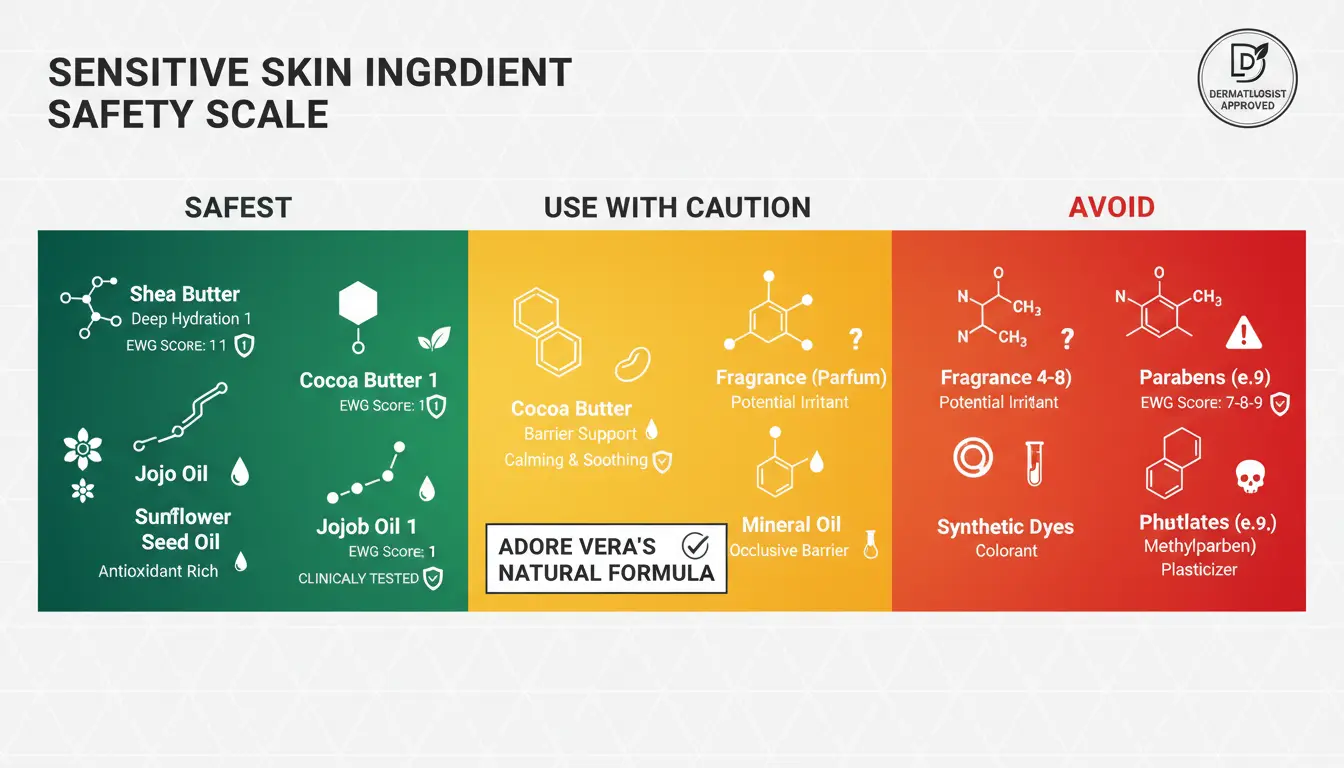
It’s crucial to understand that “natural” doesn’t automatically mean “safe for sensitive skin.” Essential oils, for example, can be irritating for some. The key is choosing products formulated with pure, unrefined butters and oils and free from common irritants.
Your Framework for Choosing the Right Body Butter
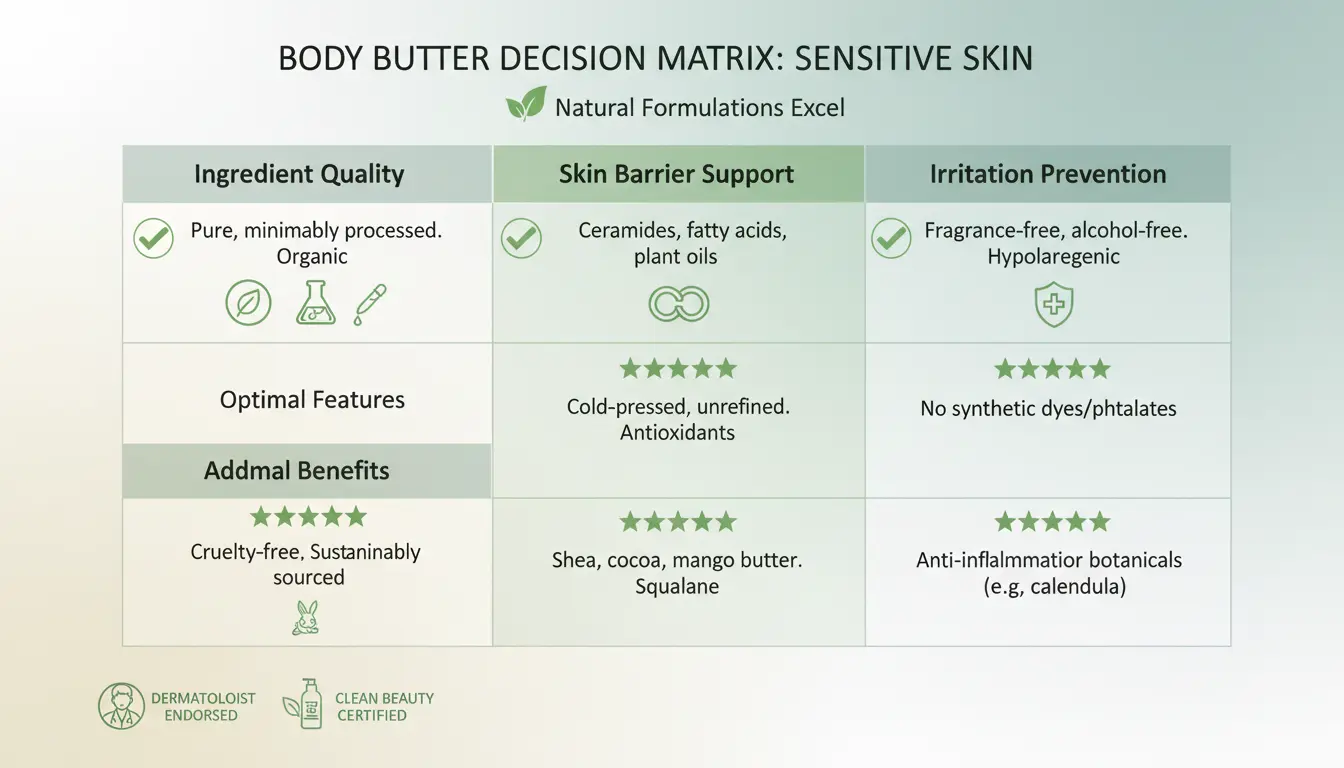
Now you can approach any product label with confidence. Use this simple checklist to evaluate potential body butters and filter out the ones likely to cause irritation.
Green Flags to Look For:
- Short Ingredient List: Fewer ingredients mean fewer potential irritants.
- Plant Butters and Oils at the Top: The first few ingredients make up the bulk of the formula. Ensure they are high-quality butters (shea, mango) and oils (jojoba, avocado).
- “Fragrance-Free” or “Scented with Natural Extracts Only”: Avoid the generic term “fragrance” or “parfum,” which can hide hundreds of synthetic chemicals.
- Minimal Preservatives: Look for gentle, plant-derived preservatives or formulas that are water-free (anhydrous), as these require fewer preservatives.
Red Flags to Avoid:
- Synthetic Fragrances (“Parfum”): The number one cause of contact dermatitis.
- Drying Alcohols: Steer clear of SD alcohol, denatured alcohol, or isopropyl alcohol, which can strip the skin. (Note: Fatty alcohols like cetyl alcohol are different and act as gentle moisturizers).
- Sulfates (SLS/SLES): Harsh detergents that have no place in a leave-on moisturizer.
- Mineral Oil & Petroleum: While they can be occlusive, they don’t offer any nutritional benefits to the skin and can feel heavy.
- Synthetic Dyes: Unnecessary additives that pose a risk for irritation.
How to Safely Introduce a New Body Butter to Your Routine
Even with the perfect ingredient list, patch testing is non-negotiable for sensitive skin. It’s a simple, low-risk way to ensure a product is compatible with your skin before applying it all over.
The Simple Patch Testing Protocol:
- Choose a Discreet Spot: Apply a small amount of the body butter to an area like the inside of your wrist or behind your ear.
- Wait 24-48 Hours: Leave the product on without washing the area.
- Observe: Check for any signs of redness, itching, swelling, or irritation.
- Proceed with Confidence: If there’s no reaction, the product is likely safe for you to use.
Once you’ve confirmed it’s a match, you can maximize body butter absorption by applying it to slightly damp skin right after a bath or shower. This helps lock in that extra layer of moisture for lasting hydration.
Frequently Asked Questions About Body Butters for Sensitive Skin
Q: Can a rich body butter cause breakouts on my body?A: It’s possible, but less likely if you choose a formula with non-comedogenic ingredients like shea butter and jojoba oil. Breakouts are often caused by pore-clogging synthetic ingredients, not pure plant butters.
Q: Is “unscented” the same as “fragrance-free”?A: Not always. “Unscented” can mean that a masking fragrance has been added to cover the natural smell of the ingredients. “Fragrance-free” is the safer choice, as it indicates no fragrances—synthetic or masking—have been added.
Q: How long will it take to see an improvement in my skin?A: You should feel immediate relief from dryness and tightness. With consistent use, you can expect to see a noticeable improvement in your skin barrier’s resilience—less redness and reactivity—within two to four weeks as your skin cells regenerate.
Q: What’s the difference between a body butter, lotion, and cream?A: The main difference is the water content. Lotions have the highest water content, making them light but less moisturizing. Creams are a mix of water and oil. Body butters are typically water-free, made almost entirely of butters and oils, providing the most intense, long-lasting hydration ideal for dry and sensitive skin.
The Final Step: Finding Your Perfect Match
Navigating the world of skincare with a sensitive profile doesn’t have to be a source of stress. By focusing on reinforcing your skin barrier, choosing products with pure, calming ingredients, and always patch testing, you can confidently find a body butter that soothes, protects, and deeply hydrates.
Your skin deserves gentle, effective care rooted in nature. Formulations that prioritize unrefined butters and oils over synthetic fillers are designed from the ground up to respect your skin’s delicate balance.
If you’re ready to experience the difference a handcrafted, natural formula can make, we invite you to explore our collection of body butters. For a complete ritual, our curated Handmade Self-Care Gift Box offers a perfect introduction to gentle, nourishing body care.

