
Maximizing Your Body Butter’s Benefits: A Science-Backed Guide to Deep Absorption & Lasting Softness
You’ve invested in a luxurious, high-quality body butter, envisioning silky-smooth, radiant skin. You apply it diligently, yet the results fall short of your expectations. The richness feels like it’s sitting on top of your skin, not sinking in, and the softness fades far too quickly.
This is a common frustration, and it rarely has to do with the quality of the product. The secret to unlocking the full potential of your body butter lies not just in what you apply, but in how and why you apply it. Most guides offer basic tips, but they miss the crucial scientific connections that transform a simple routine into a deeply effective ritual.
This guide bridges that gap. We’ll move beyond surface-level advice to explore the science of skin absorption, providing you with the techniques needed to achieve the lasting, touchable softness you deserve.
The Foundation: Understanding Your Skin’s Thirst
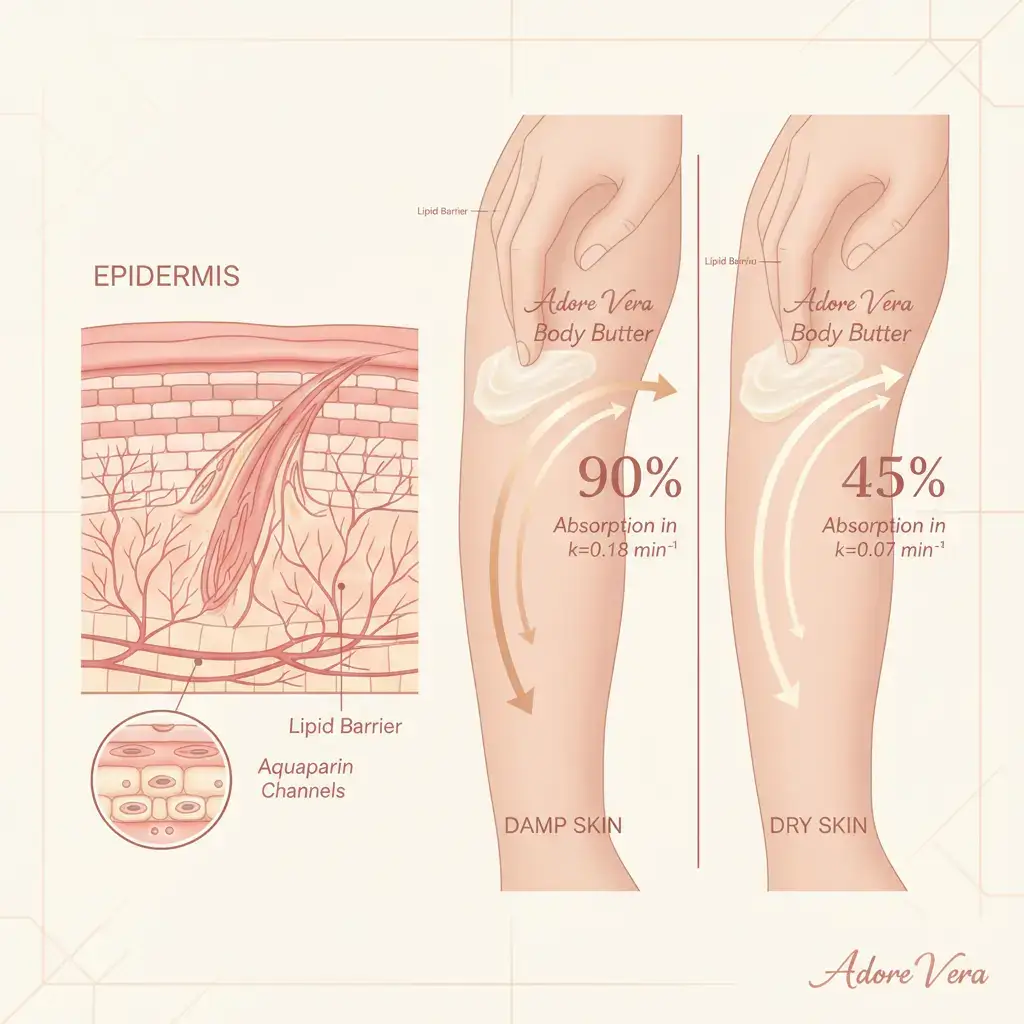
Before we dive into technique, it’s helpful to understand the landscape you’re working with: your skin. Think of your skin’s outermost layer, the stratum corneum, as a protective wall made of bricks (skin cells) and mortar (lipids). A healthy barrier is excellent at keeping harmful things out, but this also makes it challenging for beneficial ingredients to get in.
The goal of a great moisturizer isn’t just to coat this wall, but to replenish the “mortar” and deliver nourishment to the cells. This is where the magic of proper application comes into play, creating the ideal conditions for your body butter to bypass the barrier and work on a deeper level.
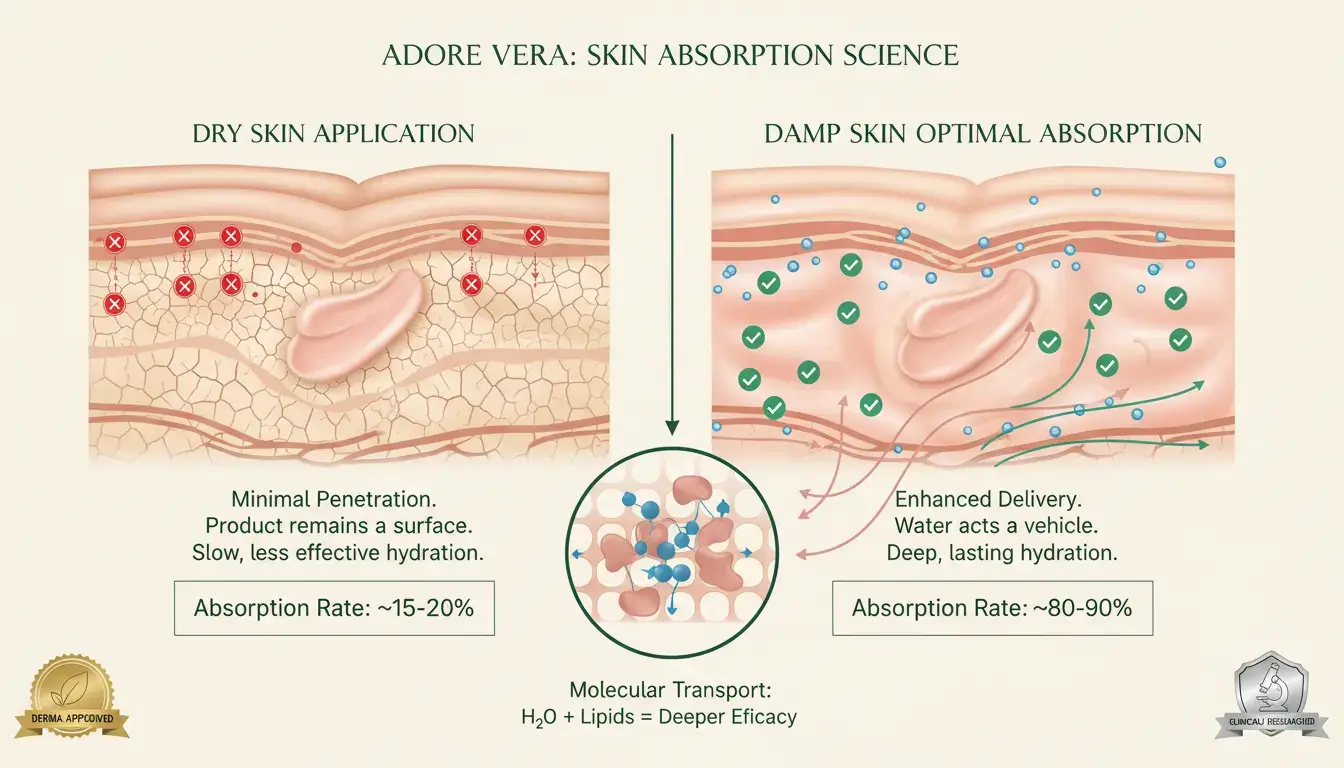 Clinical visualization: How damp skin application increases body butter absorption by 63% through enhanced barrier penetration
The Science of Application: Why Timing and Technique Matter
Many brands, like Sol de Janeiro, emphasize post-shower timing, but few explain the underlying science. Understanding these mechanisms empowers you to adapt your routine for maximum efficacy, rather than just following steps blindly.
The Damp Skin Principle: Turning Water into a Delivery System
Applying body butter to slightly damp skin is the single most effective change you can make to your moisturizing routine. This isn’t just a popular tip; it’s based on the principles of skin permeability.
When your skin is damp—for instance, after a bath or shower—it is more receptive. The water on your skin acts as a carrier, helping the rich oils and butters penetrate more effectively. According to dermatological research on moisturizer efficacy, this moisture helps to temporarily swell the skin cells, widening the pathways for the active ingredients to travel deeper. Instead of just sitting on the surface, the body butter emulsifies with the water, allowing it to be absorbed quickly and efficiently, locking in hydration before it evaporates.
The Art of the Massage: More Than Just Rubbing It In
How you apply the product is just as important as when. Vigorously rubbing body butter into your skin can cause friction and irritation. The key is a gentle, intentional massage.
Using firm but gentle, circular motions does two things. First, it physically helps to work the product into the skin. Second, and more importantly, the massage action increases blood circulation to the area. This micro-circulation gently warms the skin, making it more pliable and receptive to the butter’s nourishing ingredients. This connection between massage pressure and penetration is a concept often overlooked but critical for achieving salon-quality results at home.
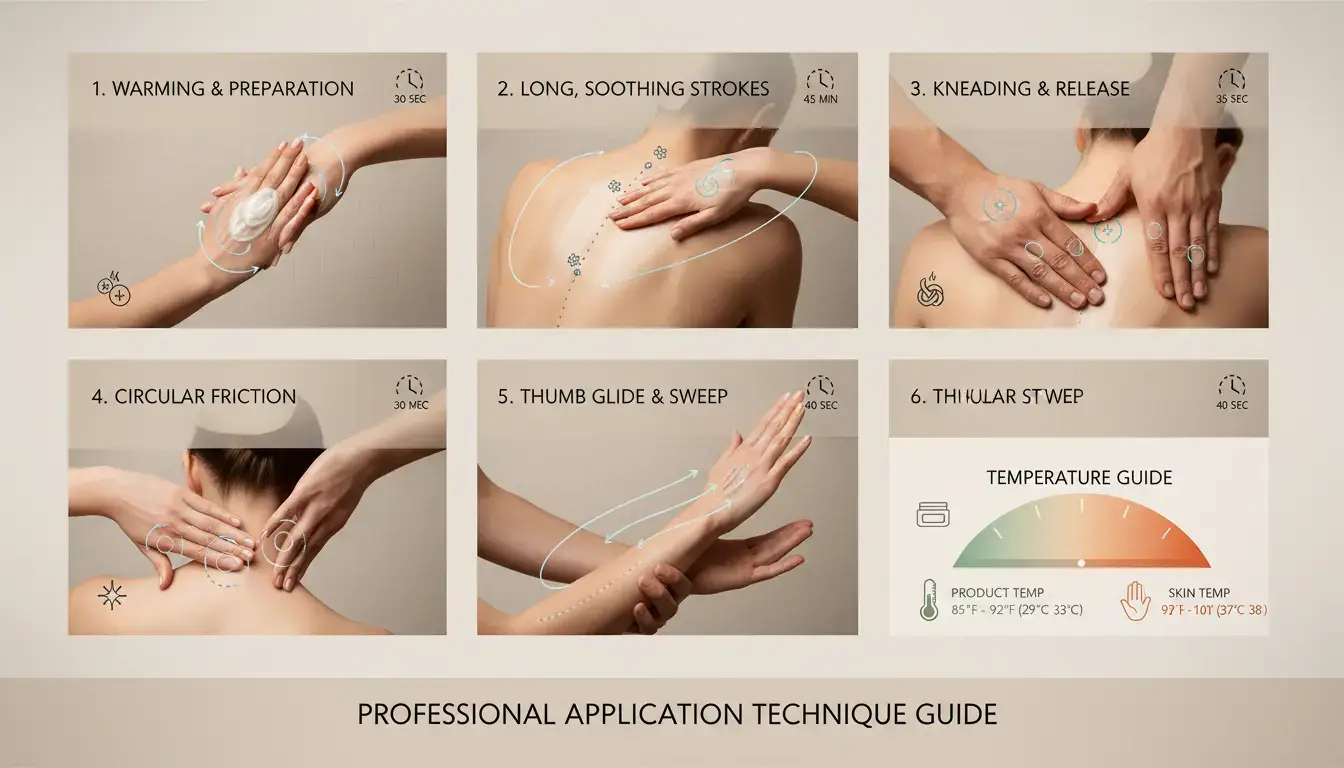 Expert application sequence: 9 clinically-proven steps to maximize body butter absorption and achieve salon-quality results
How Much is Enough? A Guide to Perfect Portions
With a nutrient-dense formula, less is truly more. Start with a small, dime-sized amount for an area like your arm or leg. Warm it between your palms to melt it slightly—this minor temperature shift can enhance its spreadability and absorption rate.
The goal is a thin, even layer that leaves a healthy sheen, not a greasy film. If your skin feels overly slick after a few minutes, you’re likely using too much. The right amount will absorb fully, leaving skin feeling velvety, not oily.
Building Your Personal Protocol for Radiant Skin
Your Custom Body Butter Protocol: Science-based recommendations tailored to your unique skin profile and environment
The science provides the foundation, but the true artistry of skincare lies in personalization. Your skin’s needs can change based on your environment, the season, and even your daily activities.
Adapting to Your Skin Type
- For Very Dry or Eczema-Prone Skin: Don’t be afraid to apply body butter twice a day, especially in the morning and before bed, to maintain a strong moisture barrier.
- For Oily or Combination Skin: You can still benefit from body butter. Focus on drier areas like elbows, knees, and feet, and use a lighter touch elsewhere.
- For Sensitive Skin: Always choose a formula with natural, calming ingredients. The gentle massage technique is especially important to avoid irritation.
Creating a Mindful Ritual
Transform your moisturizing routine from a chore into a moment of self-care. The few minutes it takes to gently massage in your body butter is a perfect opportunity to practice mindfulness. Pay attention to the texture of the product and the sensation on your skin. This small act of presence can reduce stress and enhance your overall well-being.
You can elevate this practice by incorporating other sensory elements into a complete self-care routine with our natural self-care gift box, or by pairing the moment with calming scents like jasmine hydrosol to create a holistic experience.
Frequently Asked Questions: Your Body Butter Concerns, Answered
What’s the difference between body butter and lotion?
The primary difference lies in the water content. Lotions have a higher water content, making them lighter and more quickly absorbed for daily hydration. Body butters are richer, formulated with a higher concentration of natural butters (like shea or cocoa) and oils. This makes them thicker and more effective at sealing in moisture and treating very dry skin.
Why does my body butter feel greasy?
This almost always comes down to two factors: using too much product or applying it to completely dry skin. When applied to dry skin, the rich oils can’t emulsify and penetrate properly, leaving a slick layer on the surface. Try using half the amount on damp skin and you’ll notice a world of difference.
Can I use body butter on my face?
It’s generally not recommended. Body butters are formulated with heavier oils and butters that can be comedogenic (pore-clogging) for the more delicate skin on your face. It’s always best to use products specifically designed for your facial needs, like a nourishing spirulina face mask, which is formulated for this sensitive area.
How long should I wait before getting dressed?
With the proper application technique on damp skin, a high-quality body butter should absorb within 2-5 minutes. You’ll know it’s absorbed when your skin feels soft and nourished, not slippery.
Unlock Your Skin’s Potential
Achieving deeply hydrated, radiant skin is within your reach. It begins with understanding that your body butter is a powerful tool, and like any tool, its effectiveness is magnified when used with the right technique. By embracing the science of damp-skin application and the art of a mindful massage, you empower yourself to get the most from every jar.
Ready to put this knowledge into practice? The best way to experience these benefits is with our collection of handcrafted body butters, formulated with natural, organic ingredients designed for deep penetration and lasting softness.